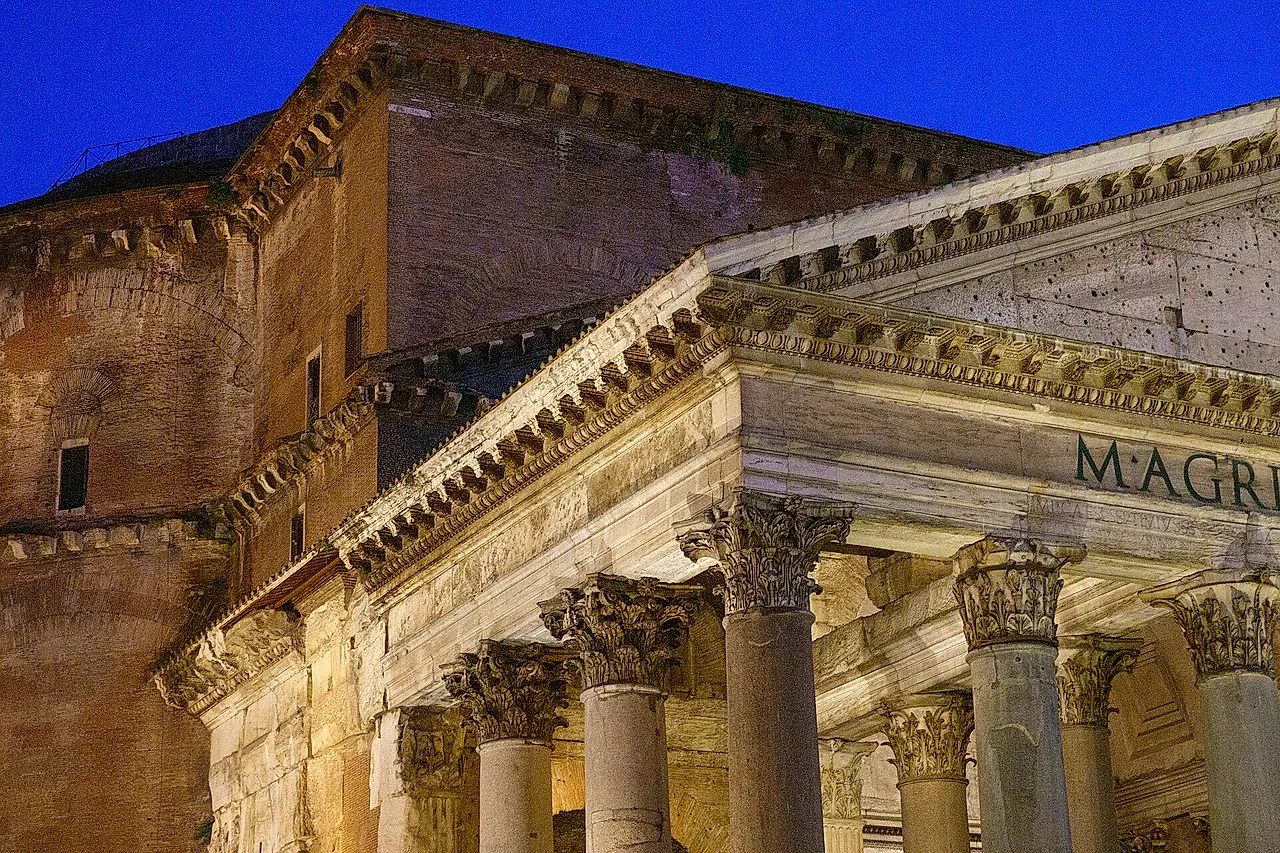
Rome · Piazza della Rotonda · temple of Agrippa, church since 609
Pantheon Rome: tickets, hours and what to know
A dome with a hole in the top, bronze doors that are almost 2,000 years old and a working church. Here is how to get in and what to expect.
Today
Opening hours for every month are on the Opening hours page.
Checked against the official website on 31 October 2026 · Official source
In short
- The Pantheon is open every day from 9:00 to 19:00. Last entry for single visitors is at 18:30, and the hours are the same all year. It closes on 25 December and 1 January, unless a special opening is announced.
- The ticket carries a name. At the entrance you show an ID, and if the name does not match, you do not go in. There is no separate fast lane: everyone enters in order of arrival. Booking ahead means you do not have to buy the ticket at the desk.
- It is a church, so cover your shoulders, keep your voice down and leave food and drinks outside. There is no cloakroom. Mass is at 17:00 on Saturdays and the day before a holiday, and at 10:30 on Sundays and holidays.
- Entry is free for children and teenagers under 18, for residents of Rome, on the first Sunday of every month, and on 4 November 2026. Visitors from the EU aged 18 to 25 get a reduced ticket. The Roma Pass is not valid here.
- Short on time? Choose the ticket with the audio guide. Want to know what you are looking at? Choose a guided visit. Planning a day in the centre? Pick a walking tour that includes the Pantheon.
The portico: sixteen granite columns and one name
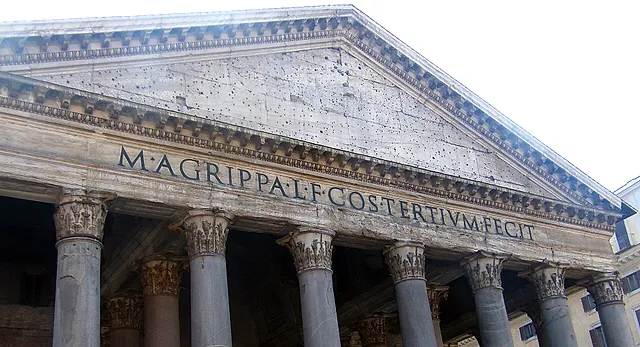
You meet the Pantheon first as a temple front: sixteen columns of grey and pink granite, each about 12 metres tall and weighing around 60 tonnes. They were cut in quarries in Egypt.
Look up at the frieze. The lettering still says that Marcus Agrippa, consul for the third time, built it. The building you enter was rebuilt later, under Hadrian, but the inscription still names Agrippa.
The dome and the oculus: light with no glass
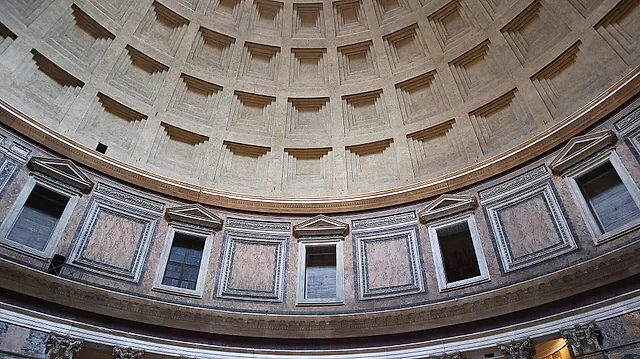
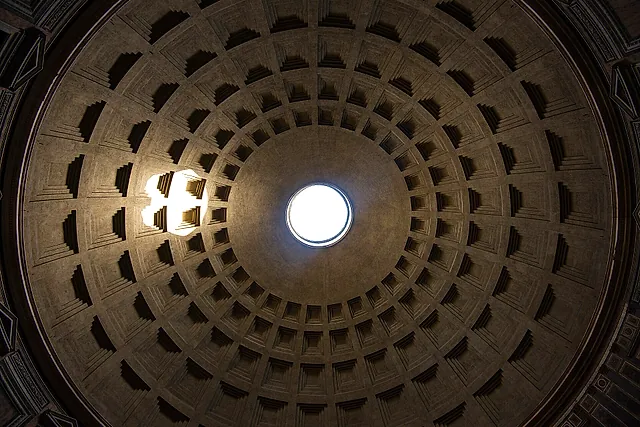
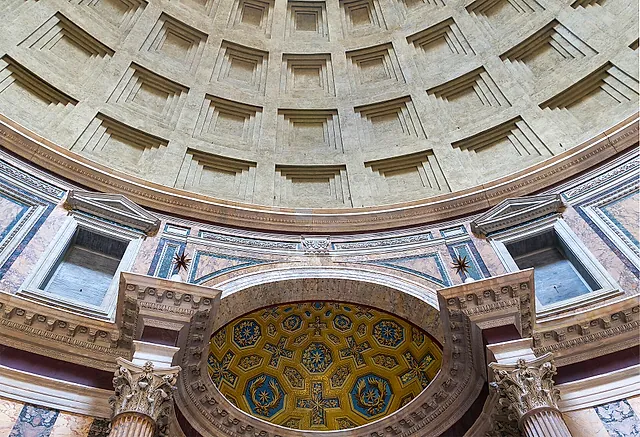
Inside, the rotunda is as wide as it is high: about 43 metres. It is still the largest dome in the world made of unreinforced concrete. At the top, an opening of about 9 metres, the oculus, is the only window. A patch of sunlight crosses the walls and the floor as the day goes on.
When it rains, water falls in. The floor slopes slightly and has 22 drain holes that you can hardly see.
From temple to church: the altar and the apse
In 609 the building was given to the pope and became the church of Santa Maria ad Martyres, the name it still has. That change protected it from being stripped for its materials, and it is why the Pantheon is still standing.
The altar and the apse face the door. Services are still held here, which is why the visiting hours and the rules at the entrance follow the life of a church.
The tombs: Raphael and the kings of Italy
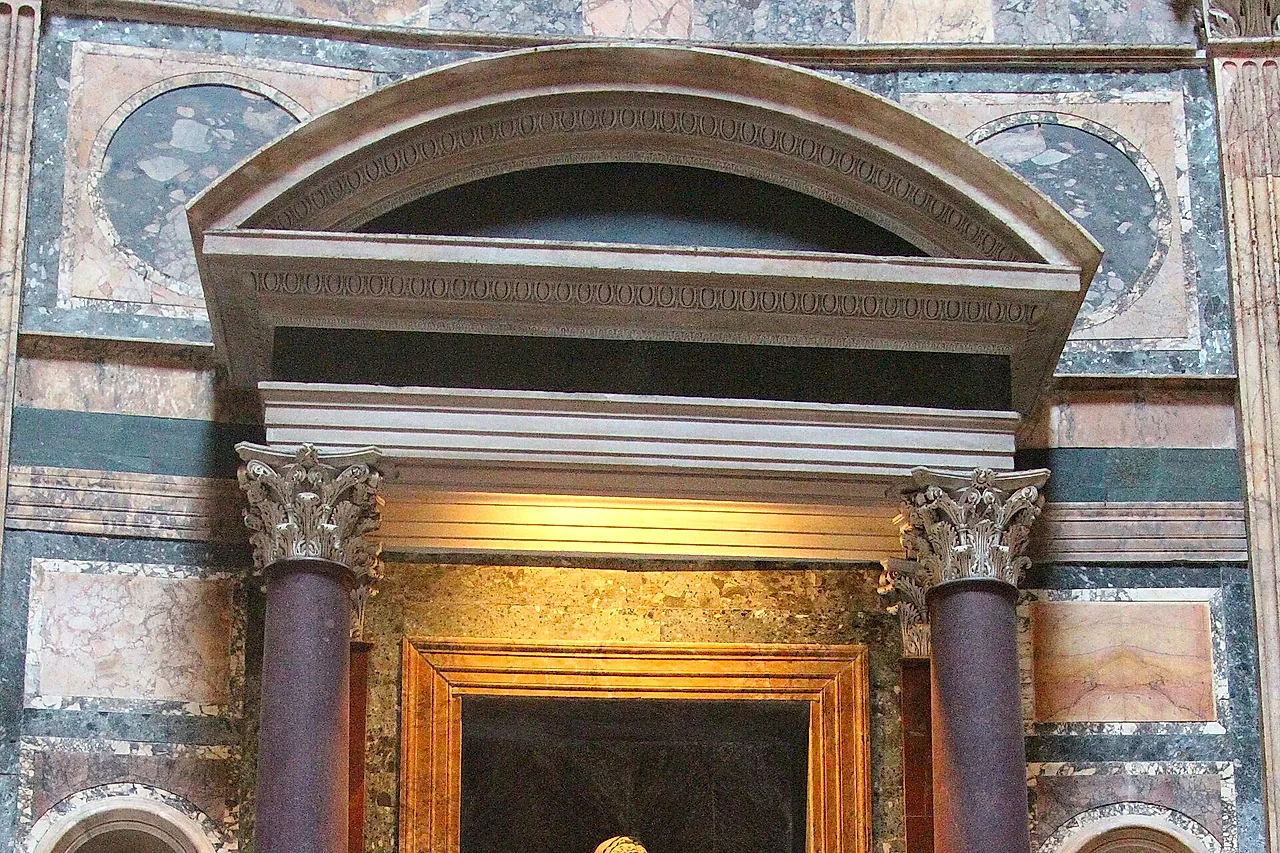
The painter Raphael is buried here. His sarcophagus stands in a niche with a Latin epitaph that says nature feared to be outdone while he lived, and to die when he died.
Italy's first two kings, Victor Emmanuel II and Umberto I, rest in chapels along the right side, and so does Queen Margherita.
Visitor guide
Pantheon Rome Tickets: Free Days, Rules and Options
Pantheon Rome tickets: who enters free, why the ticket carries a name, the dress code at the door and which option to choose, from audio guide to tour.
Pantheon Rome: What to See Inside and Outside
What to see at the Pantheon in Rome: the portico and its inscription, the dome and the oculus, Raphael's tomb, and what to visit in the square outside.
Pantheon Rome Opening Hours and How to Get There
Pantheon Rome opening hours, last entry, closing days, Mass times and how to reach Piazza della Rotonda by metro, bus and on foot from the airports.
Pantheon Rome History: From Agrippa to the Church
The history of the Pantheon in Rome: Agrippa's temple, Hadrian's rebuilding, the church of 609, the bronze that was taken away and the tombs inside.